Solar O&M · United States
Drone solar panel inspection and maintenance in the USA
Finding a hotspot is the easy part. This site covers what happens next: the capture, the classification, the work order, the repair, and the dated evidence that keeps a warranty claim alive — written for asset owners, EPCs and O&M teams operating under US rules.
The gap
The industry solved detection and stopped there
Inspection software has become genuinely good. AI anomaly detection, radiometric thermal processing and orthomosaic stitching are commodity capabilities now, offered by a dozen credible platforms. Ask any of them what happens to a confirmed hotspot after the report is delivered and the answer gets vague.
That vagueness is where solar sites lose money. An anomaly list that nobody converts into dispatched labor is a document, not maintenance. Three failure patterns show up again and again on US sites:
The report that dies in a drive
A PDF arrives with 180 flagged modules. Nobody owns the triage, so the top ten get fixed and the rest roll into next year's report, where they appear again with worse thermal signatures.
The claim filed too late
Module and workmanship warranties have notice windows. Evidence dated after the window closes is evidence the manufacturer does not have to accept, no matter how clear the thermal image is.
The repair nobody verified
A replacement module goes in and the ticket closes. Without a post-repair flight, nothing proves the string recovered — and a mis-wired replacement looks fine from the ground.
The useful question is not "which drone platform detects best" but "what is the shortest path from thermal pixel to closed work order with evidence attached".
Defect reference
What a thermal sweep finds, and what you do about it
Every row below follows the same chain: the symptom in the air, how it is confirmed on the ground, the maintenance action, and the record that has to survive an audit or a claim.
| Symptom in thermal | Likely cause | Ground confirmation | Maintenance action | Evidence to keep |
|---|---|---|---|---|
| Single cell hot, 10–20 K above neighbors | Cell crack, shunt, or localized shading damage | Handheld IR plus visual glass check; EL imaging if a claim is likely | Monitor if output is intact; replace once the delta grows or the module trips | Radiometric frame, module serial, date, ambient and irradiance at capture |
| One-third of module uniformly warm | Bypass diode failed short | Junction box inspection, open-circuit voltage check | Replace junction box or module; diode failures rarely recover | Before/after IR pair, warranty claim reference, installer ticket |
| Whole module cooler than its string | Open circuit — connector, cable or internal break | Continuity and IV curve trace on the string | Re-terminate or replace the connector; MC4 mating faults are common | String ID, IV trace before and after, torque record if re-terminated |
| Hot spot at the junction box or connector | Resistive joint, water ingress, UV-degraded connector | Thermal close-up and physical inspection; check for arcing marks | Prioritize — this is the fire-risk category, not a yield category | Photo of the joint, replacement part number, re-test reading |
| Even warming across many strings, no pattern | Soiling, pollen, or dust accumulation | Soiling-ratio comparison against a clean reference row | Schedule cleaning when the loss exceeds the cleaning cost — not on a calendar | Soiling ratio over time, local rainfall record, cleaning invoice |
| Sharp-edged shading shapes moving with the sun | Vegetation growth, new structure, equipment left in a row | Compare orthomosaics across two flights | Vegetation management or re-siting of the obstruction | Dated orthomosaic pair showing the encroachment |
| Entire combiner or inverter block dark | Tripped breaker, inverter fault, communication loss | SCADA cross-check — the drone found it, the monitoring should have | Electrical dispatch, plus an alarm-tuning review afterwards | Outage window, SCADA log, root cause note |
| Mosaic pattern across module cells | Potential-induced degradation or cell mismatch | Not a drone call — needs IV, EL or dark-IV lab work | Investigate at string level; PID is a system design conversation | Flight evidence plus the lab result that confirmed it |
Severity language should follow a recognized scheme — IEC TS 62446-3 for thermographic classification of PV plants — so that the same anomaly gets the same priority next year and across contractors.
Capture to closed ticket
The seven-step workflow
This is the part competitors leave out. Steps 1–3 are inspection. Steps 4–7 are maintenance, and they are where the money is.
-
Plan the flight against the conditions, not the calendar
Thermal work needs irradiance above roughly 600 W/m², low wind, clear sky and a stable plane of array. Fly the wrong hour and marginal faults hide inside the noise. Clearance, airspace authorization and site access get resolved here, not on the day.
-
Capture radiometric thermal plus visual, in one pass
Dual-sensor payloads give you the heat signature and the matching RGB frame to prove what it is. Keep the radiometric originals, not just the JPEG overlay — a claim adjuster will ask for temperature values, not colors.
-
Process to a georeferenced anomaly list
Stitch to an orthomosaic, pin every anomaly to a module position in the as-built layout, classify severity, and attach the ambient conditions at capture. An anomaly without a module address cannot be dispatched.
-
Triage against yield, risk and warranty status
Three questions per anomaly: how much energy is it costing, is it a safety or fire risk, and is it still inside a warranty window. A connector hotspot with no measurable yield loss still outranks fifty cold cells.
-
Push work orders into the system of record
CMMS, ERP or GIS — whatever the owner already runs. Each ticket carries the module serial, the thermal frame, the severity class and the deadline. If a human retypes this from a PDF, the loop is already broken.
-
Execute, and record what was actually done
Part numbers, serials of removed and installed modules, torque values, technician and date. This record is the warranty claim and the insurance file; it is not administrative overhead.
-
Verify by re-flight, then close
A short targeted flight over the repaired zones proves recovery and catches the mis-wired replacement. Closing a ticket without verification is how the same anomaly turns up in next year's report.
Site types
Rooftop, commercial, and utility-scale buy differently
These three buyers search differently, budget differently and care about different evidence. Treating them as one audience is why so much solar drone content converts badly.
Residential and small rooftop
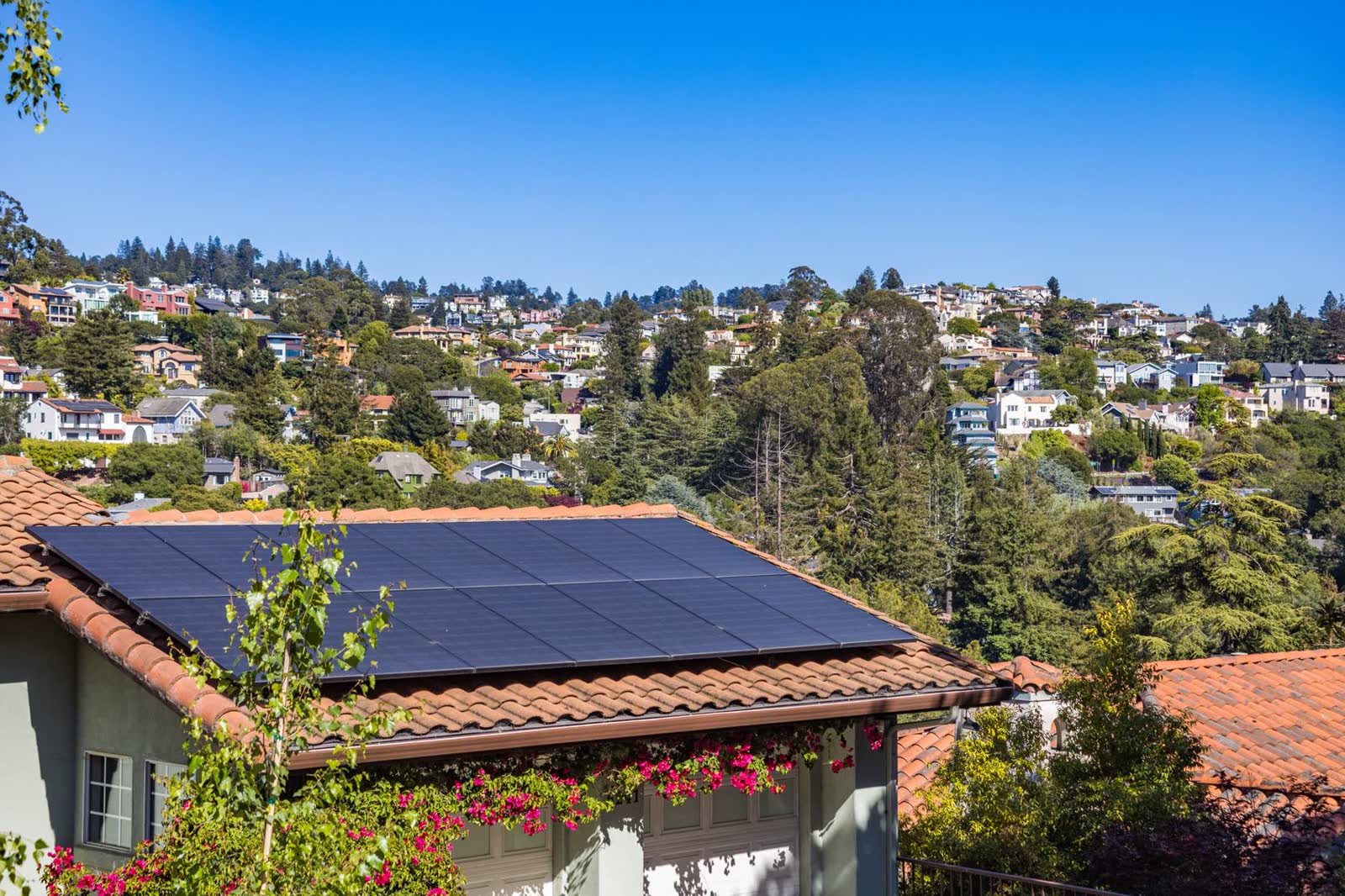
Decision driver: a bill that stopped dropping, or a roof that is about to be worked on. Single flights, fast turnaround, plain-language report. The real value is avoiding a roof walk and catching a string outage the homeowner never noticed.
Watch for: operations over people and near structures, and HOA or municipal privacy sensitivities.
Commercial and industrial
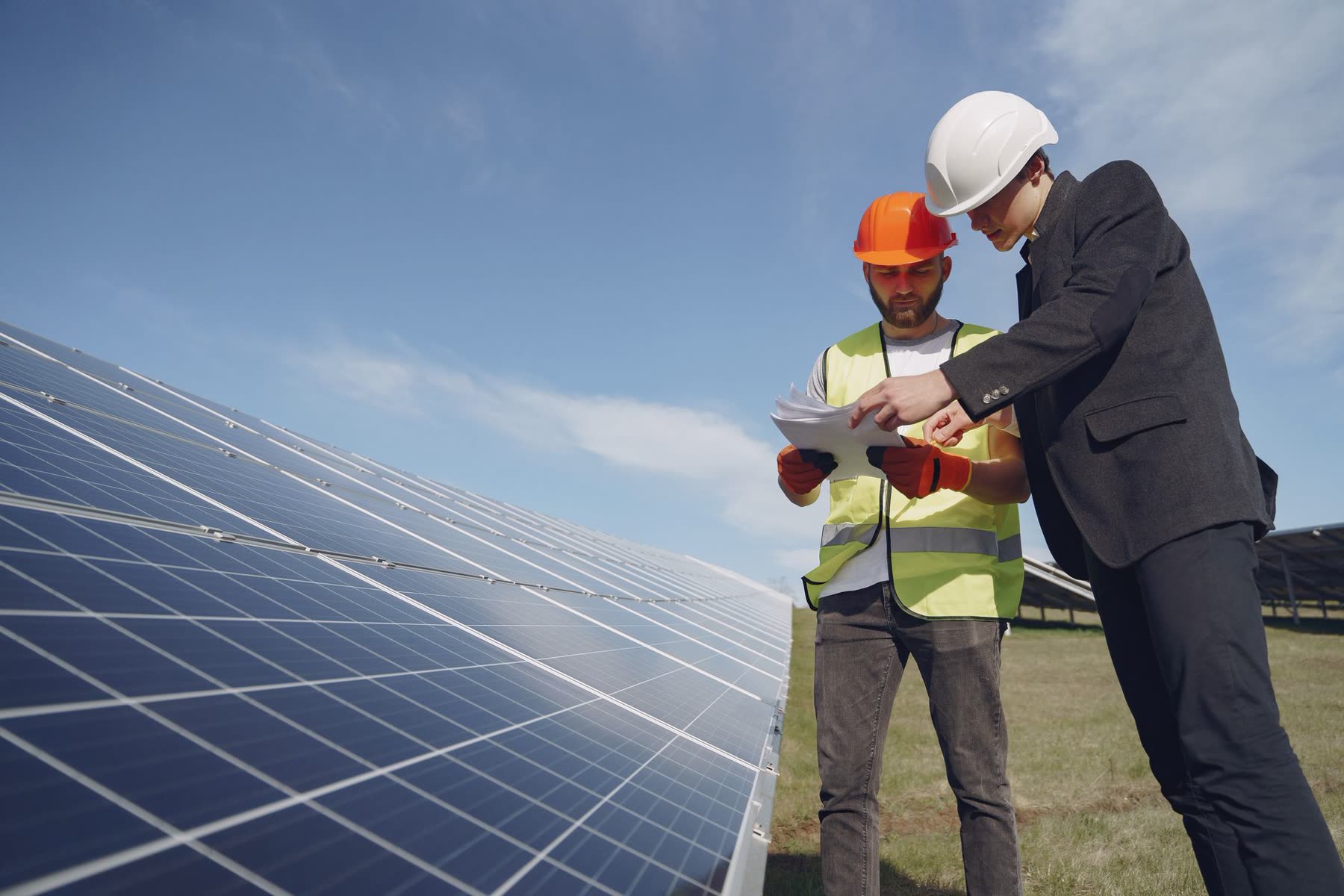
Decision driver: a performance guarantee, a lease obligation, or a facilities manager who owns uptime. Wants annual cadence, a repair path and documentation that satisfies the landlord and the insurer. Usually the easiest segment to turn into recurring work.
Watch for: tenant coordination, roof warranty terms, and who actually holds the O&M contract.
Utility-scale
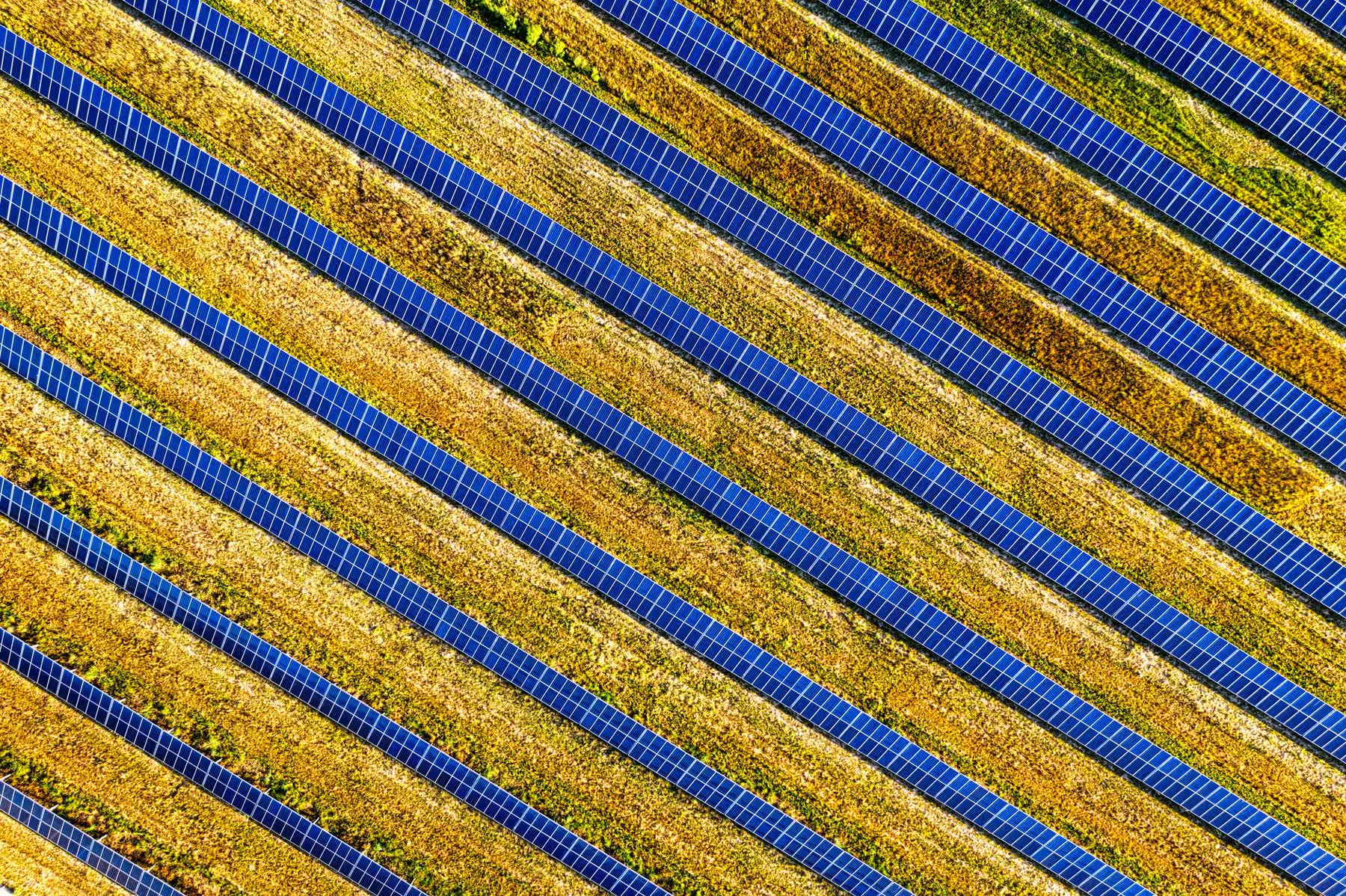
Decision driver: the availability guarantee and the lender's reporting requirements. Needs megawatt-scale throughput, SCADA cross-referencing, module-level traceability across hundreds of thousands of serials, and integration with the asset management stack.
Watch for: data volume, as-built layout accuracy, and whether anomalies can be matched to string monitoring.
US operating rules
What FAA compliance actually requires on a solar site
Most global vendor pages skip this entirely, which is exactly why US buyers distrust them. A commercial solar inspection flight in the United States sits under 14 CFR Part 107, and the practical checklist is short:
The baseline, no waiver needed
A certificated remote pilot in command; aircraft registered; visual line of sight maintained; daylight or civil twilight with anti-collision lighting; at or below 400 ft AGL (or within 400 ft of a structure); Remote ID broadcasting, which has been required for operations since March 2024.
Where authorization enters
Controlled airspace needs an authorization, in practice through LAANC — relevant more often than people expect, because large arrays sit near regional airports. Operations over people, night work beyond the lighting rule, one pilot flying multiple aircraft, and beyond visual line of sight all need a waiver under §107.200 or the relevant section.
BVLOS and the Part 108 question
Routine beyond-visual-line-of-sight flight is the unlock for one-pilot coverage of a 500 MW site. The FAA published its Part 108 proposed rule in the Federal Register in August 2025, and as of October 2026 the final rule sits in White House OIRA review, with publication expected late 2026 into 2027 and staggered compliance dates after that. Until it lands, large-site BVLOS runs on individual waivers and exemptions.
What the owner's paperwork needs
Aviation liability insurance naming the site, a documented pre-flight and emergency procedure, airspace authorization records, and pilot certificate numbers on file. Lenders and insurers increasingly ask for this before accepting drone-sourced evidence in a claim.
Rules change. Verify current requirements against the FAA directly before an engagement; this page is reference material, not legal or regulatory advice.
Local sector pages
The same drone, very different jobs, state by state
A national page cannot answer the question an owner in Lubbock or Fresno or Buffalo is actually asking. Hail frequency, dust, snow load, humidity, state tax treatment, interconnection queue and inspector expectations all change the cadence and the economics. Smaller markets get the least coverage and have the fewest qualified operators, which is exactly why they are worth writing for.
Published
West Texas — Lubbock, Midland, Odessa
Hail alley, caliche dust, 100 °F+ derate, ERCOT interconnection, and a state property tax exemption that treats on-site generation very differently from a merchant solar farm.
Planned
Upstate New York
Snow load and ice shedding, short winter capture windows, NYSERDA program structure, and community solar portfolios of many small sites instead of one big one.
Planned
Central Valley, California
Agricultural dust and smoke season, Rule 21 interconnection, agrivoltaic installations, and wildfire-driven soiling that breaks calendar-based cleaning schedules.
Planned
Gulf Coast — Louisiana and Mississippi
Hurricane season inspection surges, humidity-driven connector corrosion, post-event insurance documentation, and a thin local operator market.
Planned
High Desert — New Mexico and Arizona
Soiling is the dominant loss mechanism, water for cleaning is scarce and expensive, and the cleaning-versus-loss calculation is the whole conversation.
Planned
Upper Midwest — Minnesota and the Dakotas
Bifacial snow albedo gains, extreme cold payload limits, short flying season, and a long distance between qualified thermographers.
The money argument
Where the return actually comes from
The inspection line item is rarely the decision. Four effects dominate, and they compound in this order:
Recovered yield from faults found early
A string sitting dark for eight months is energy nobody billed for. The value of an inspection is the production restored multiplied by the months it would otherwise have stayed broken — which is why timing beats precision.
Warranty recovery inside the window
Dated thermal evidence turns a replacement cost into a manufacturer obligation. Miss the notice window and the same defect becomes a capital expense.
Labour and risk avoided
Fewer roof walks, fewer hours in a live DC environment, no manual IR sampling of a fraction of the array. Safety exposure drops along with the hours.
Cleaning spend aimed at losses, not dates
Soiling data lets a site clean when the measured loss exceeds the cleaning cost. In dusty regions this single change often pays for the inspection program.
The honest framing for a proposal is a range, not a promise: energy recovered per flagged fault, claim value preserved, and labor hours removed. Anyone quoting a precise site-wide percentage before flying the site is guessing.
Field notes
Operator interviews and site walkthroughs
Transcripts from conversations with US drone operators, O&M leads and asset managers will be published here and linked from the regional pages, so that each regional claim traces back to someone who works there.
Coming soon
Transcript library in preparation. Each entry will carry the date, the role of the person interviewed, the region discussed, and the specific claims on this site that it supports.
No newsletter, no sales call
Follow the work on YouTube
Flight footage, thermal walkthroughs, defect breakdowns and regional deep dives. That is the only thing this site asks for right now — no email capture, no contact form, no gated PDF.
Questions
Frequently asked
How often should a US solar site be inspected by drone?
Most utility-scale sites run one full thermal sweep per year as a baseline, usually tied to the performance guarantee or warranty cycle. Sites in hail, dust or wildfire-smoke regions add a second sweep, and run an event-driven flight after any storm that could have caused glass or racking damage. Rooftop commercial arrays are commonly flown annually, or at tenant change and roof work.
Do you need an FAA waiver to fly a drone over a solar farm?
No waiver is needed for a routine inspection flown under Part 107 by a certificated remote pilot, within visual line of sight, in daylight or civil twilight with anti-collision lighting, under 400 ft, with Remote ID broadcast. Waivers or authorizations come into play for controlled airspace (handled through LAANC), operations over people, multiple aircraft under one pilot, and beyond visual line of sight.
What defects can a thermal drone actually find on a PV module?
Cell hotspots, bypass diode failures, substring and full-module open circuits, junction box and connector heating, string and inverter outages, and soiling or shading patterns. It does not grade microcracks, delamination or potential-induced degradation on its own — those need electroluminescence, IV curve tracing or on-site electrical testing to confirm.
Is drone inspection cheaper than manual IR scanning?
Per megawatt, usually yes, because a crew with a handheld camera samples a fraction of the modules a drone covers in a day. The larger saving is normally not the inspection line item but the avoided yield loss from faults found earlier, plus warranty claims filed inside the claim window with dated thermal evidence.
What should a drone inspection deliverable include?
Four parts: a georeferenced orthomosaic with each anomaly pinned to a module position, a severity-classified anomaly list following an IEC 62446-3 style scheme, the retained radiometric imagery for warranty and insurance use, and an export that drops into the maintenance system as work orders rather than a PDF somebody has to retype.
Reference
Standards and sources worth reading directly
- FAA — Part 107 rules for commercial drone operators and Remote ID requirements.
- FAA — Part 108 beyond-visual-line-of-sight proposed rule, published in the Federal Register on 7 August 2025; final rule under OIRA review as of October 2026.
- IEC TS 62446-3 — thermographic inspection of photovoltaic modules and plants, the basis for consistent anomaly severity classification.
- NREL — photovoltaic reliability and degradation research, for the fault-rate assumptions behind any ROI model.
Last reviewed 6 October 2026. Where this page states a regulatory position, verify it against the primary source before relying on it commercially.