Region · Texas
Drone solar inspection in West Texas
South Plains and Permian Basin — Lubbock, Midland, Odessa, Amarillo, Abilene, San Angelo. Two loss mechanisms dominate here and neither of them respects an annual inspection calendar.
Why this region reads differently
Abundant sun, punishing conditions, thin operator coverage
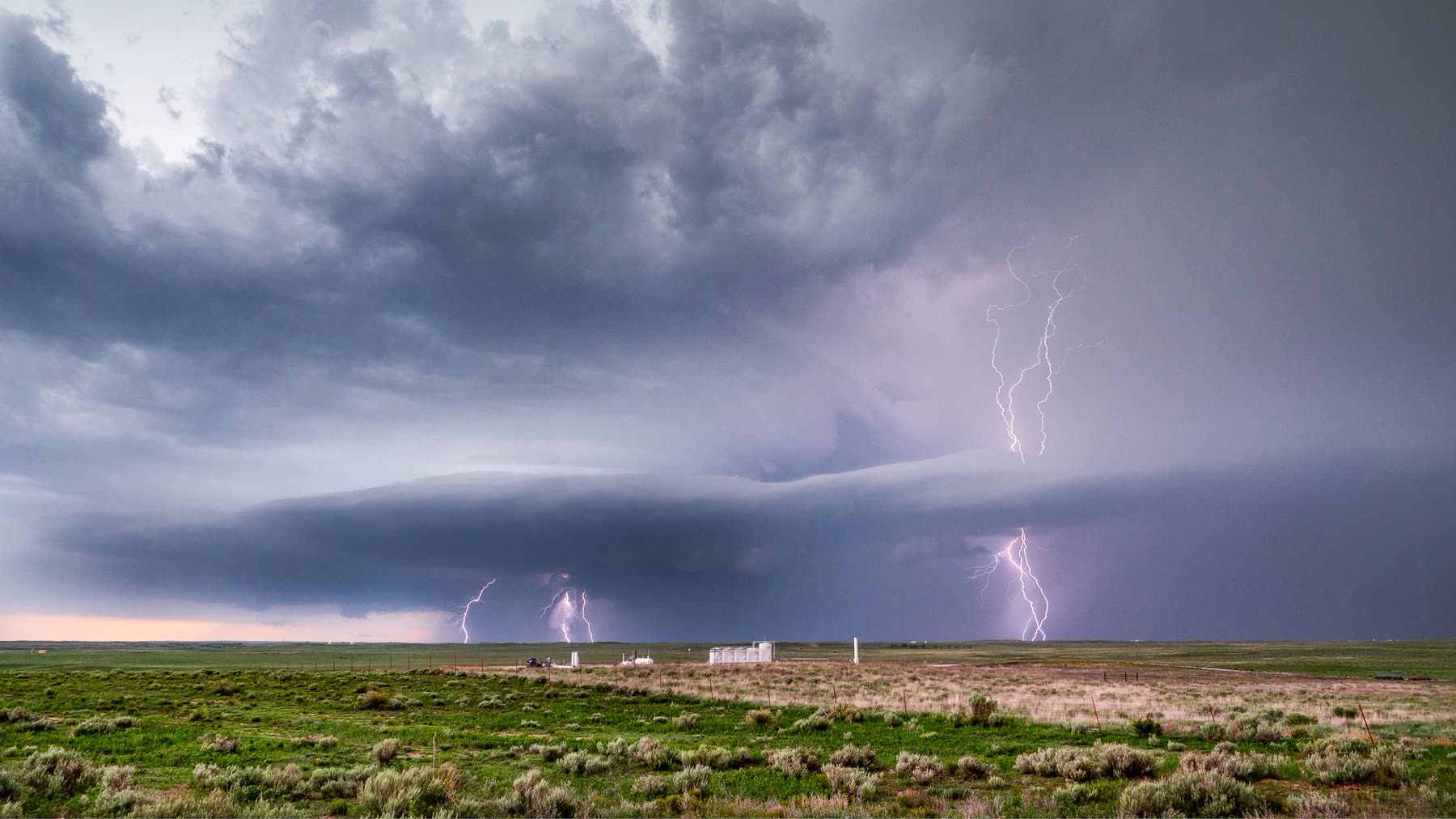
West Texas has close to the best solar resource in the continental United States and some of the hardest operating conditions on the equipment that captures it. The same flat, cloud-free terrain that makes the resource excellent also delivers spring supercells, blowing caliche dust, sustained wind that rules out flying for days at a time, and summer ambient temperatures that push modules well past their rated test conditions.
It is also under-served. Qualified thermographers cluster around Dallas, Houston and Austin, which means a site outside Odessa often waits weeks for a flight or pays travel for a crew driving six hours each way. That gap is the reason this page exists: the work is needed here more than most places and offered here less than most places.
Hail
The Texas Panhandle and South Plains sit in one of the highest hail-frequency corridors in the country, peaking from roughly April through June. Hail is the single largest catastrophic risk to a Texas PV asset, and insurers have tightened terms accordingly since the Texas hail losses of recent years.
Dust and soiling
Caliche dust from unpaved roads, tilled cotton ground and construction traffic deposits a film that rain rarely clears in a dry year. Soiling here is a continuous yield tax, not a seasonal nuisance, and it is measurable from the air before anyone decides to spend money on water.
Heat and wind
Summer ambient above 100 °F pushes cell temperatures far beyond 25 °C STC, suppressing output and shrinking the thermal contrast that makes anomalies visible. Sustained spring wind closes flight windows and loads racking and trackers.
Inspection calendar
The West Texas cadence: two sweeps plus events
An annual flight is a national default. It is the wrong default here, because both dominant loss mechanisms are episodic rather than linear.
-
Late spring, after the hail peak
Full thermal and visual sweep once the severe season eases, typically late June. This is the flight that catches cracked glass, impact-damaged cells and racking shifted by wind before summer heat masks the thermal signatures.
-
Late summer or early fall, after dust loading
Second sweep aimed at soiling quantification and the electrical faults that accumulated through the high-production months. Timed so that any cleaning decision still buys you productive months in the same year.
-
Event-driven, within days of a storm
Any reported hail of roughly one inch or larger over the site triggers a flight. Insurers want condition evidence close to the event date, and a thermal sweep finds the impact cracks that a windscreen survey from the access road misses entirely.
-
Pre-season baseline, if a claim is plausible
A documented pre-season condition flight is cheap insurance in a hail region. Without it, every post-event anomaly is arguable as pre-existing, and that argument is usually won by whoever holds dated imagery.
Tracker sites should also confirm that hail-stow commands actually executed during the last alert. A stow that failed is both an immediate risk and a maintenance finding in its own right.
Texas law and tax
Two very different tax situations, often on the same page of a proposal
Texas treatment of solar property depends on where the electricity goes, and conflating the two is a common and expensive error in regional proposals.
| Situation | Mechanism | What it means for O&M |
|---|---|---|
| On-site generation — a gin, a hospital, a school district, a warehouse roof | Tax Code §11.27 exempts the appraised value arising from a solar or wind-powered energy device primarily for the production and distribution of energy for on-site use. Claimed on Comptroller Form 50-123. | The exemption attaches to a functioning device. Documented maintenance that keeps the array operating as a generation asset supports the position taken on the appraisal roll. |
| Merchant or utility-scale generation exporting to ERCOT | No §11.27 exemption. Local abatement under Tax Code Chapter 312, negotiated with the county or city and extended by the Legislature to 1 September 2029. | Chapter 312 agreements normally carry performance and reporting obligations. Inspection records are part of showing the asset is operating as represented. |
| Projects that once would have used Chapter 313 | The Chapter 313 school value limitation expired at the end of 2022. Its replacement, the JETI program in Government Code Chapter 403, Subchapter T, effective 1 January 2024, excludes renewable electric generation. | Newer Texas solar projects carry a thinner incentive stack than the 2015–2022 cohort, which puts more weight on operating margin — and on avoided yield loss. |
Texas has no state income tax, so property tax is the dominant state-level consideration for an operating solar asset. Verify current statute text and local abatement terms with a Texas property tax professional; this is reference material, not tax advice.
Airspace
Part 107 in the Permian and on the Plains
Mostly Class G, which is the easy case
Most West Texas arrays sit in uncontrolled airspace where a Part 107 remote pilot can fly a routine inspection with no authorization at all. That is a genuine regional advantage over coastal metro sites.
Where authorization is needed
Controlled airspace around Lubbock Preston Smith International (LBB), Midland International Air and Space Port (MAF), Rick Husband Amarillo International (AMA), Abilene Regional (ABI) and San Angelo Mathis Field (SJT) requires an authorization, handled in practice through LAANC.
Oilfield traffic is the real hazard
The Permian Basin carries low-level helicopter and survey traffic that does not appear on a sectional. Check NOTAMs and temporary flight restrictions on the day, and brief a see-and-avoid plan rather than assuming an empty sky over empty ground.
Wind closes more windows than airspace does
Spring wind regularly exceeds safe operating limits for small multirotors for days at a time. Build schedule slack into a West Texas engagement; a crew that drove in from Dallas for a single day will lose that day more often than it wins it.
Market conditions
ERCOT curtailment is a maintenance scheduling tool
West Texas generation regularly meets transmission congestion and low or negative midday prices. For an O&M team this is not only a revenue problem — it is an opening. Work that requires a string or block offline costs far less during hours the site was not going to be paid for anyway.
Two practical consequences:
Sequence repairs into curtailed hours
Pull the curtailment and pricing history for the site, then schedule planned outages into the hours that repeat. On a congested node this can turn a costly outage window into a nearly free one.
Price the fault, not the flight
A fault's cost is its lost production valued at the node's actual settled price, not at an average retail rate. In West Texas that distinction materially changes which anomalies deserve a truck roll first.
Who needs this locally
The West Texas buyer list is not the one in the brochures
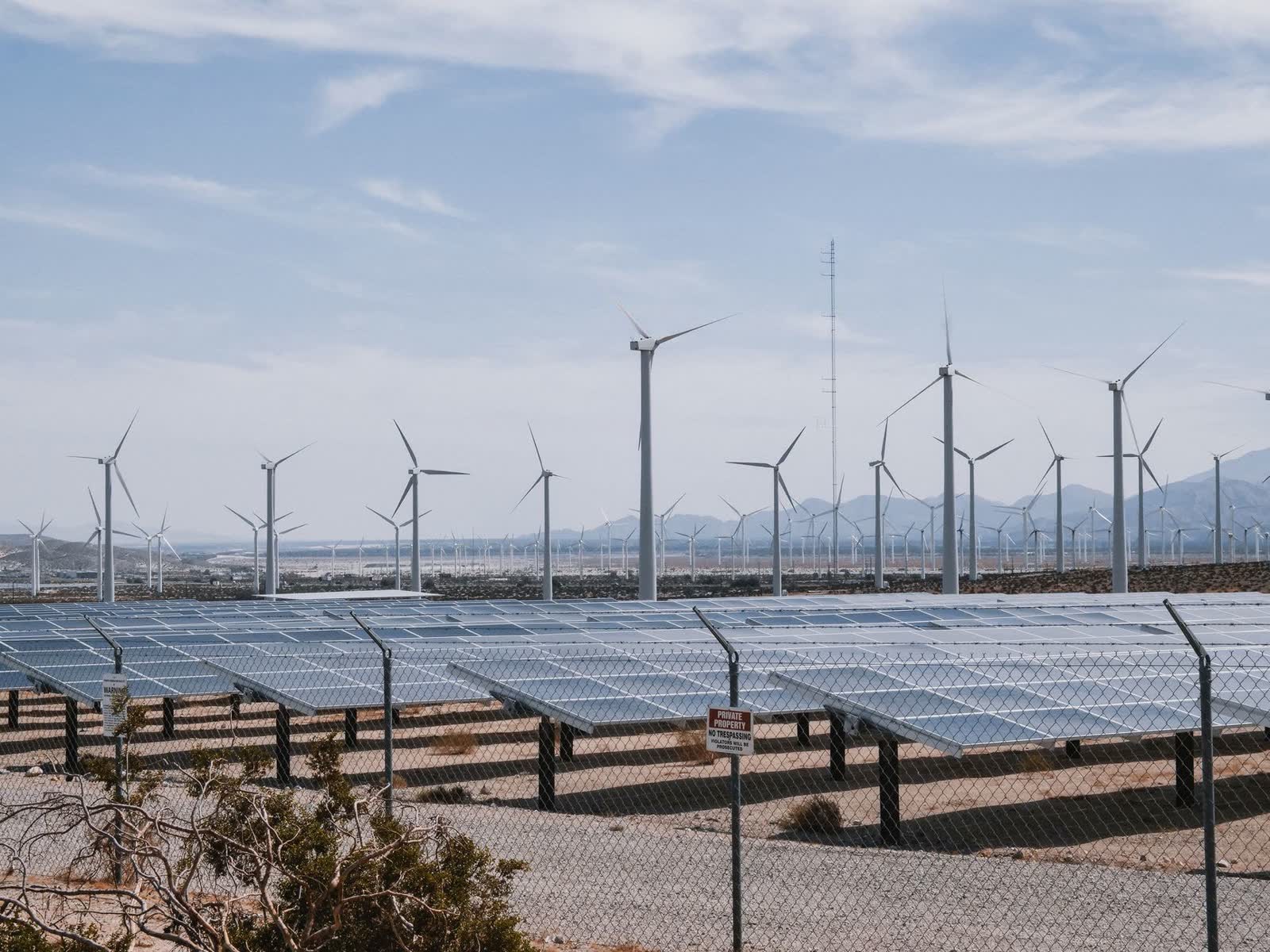
Regional demand here is not only utility-scale developers. The under-served segment is mid-size on-site generation owned by organizations without an energy department:
Agricultural and gin operations
Cotton gins, irrigation districts and feed operations with on-site arrays sitting beside the dustiest ground in the state. Soiling data pays for itself fastest here, and §11.27 applies to the on-site case.

Municipal, school and hospital arrays
ISDs, city facilities and regional hospitals across Lubbock, Midland and Abilene installed arrays with grant or bond funding and no maintenance program behind them. Documentation matters to their boards as much as yield does.

Oilfield and industrial self-generation
Permian operators running solar for remote loads and electrified equipment. Small arrays, high reliability expectations, and sites nobody visits often enough to notice a dark string.
Field notes
Local sources
Interview transcripts with West Texas operators and O&M leads will be linked here, so that each regional claim on this page points to someone who works in the region. In preparation.
Questions
West Texas FAQ
How often should a West Texas solar array be inspected by drone?
Twice a year plus event-driven flights. One full thermal sweep in late spring after the hail peak, one in late summer or fall once dust has loaded, and a targeted flight after any storm with reported hail around one inch or larger. Calendar-only annual inspection under-serves this region because both dominant loss mechanisms are episodic.
Does Texas exempt solar panels from property tax?
Tax Code §11.27 exempts the appraised value arising from a solar or wind-powered energy device primarily for on-site use, claimed on Comptroller Form 50-123. It does not cover merchant generation exporting to the grid. Utility-scale projects negotiate local abatements under Chapter 312, extended to 1 September 2029, because the Chapter 313 school value limitation expired at the end of 2022 and the replacement JETI program (Government Code Chapter 403, Subchapter T) excludes renewable electric generation.
Do you need FAA airspace authorization near Lubbock or Midland?
Most West Texas arrays are in Class G airspace and need none under Part 107. Sites inside the controlled airspace around LBB, MAF or AMA need an authorization, obtained in practice through LAANC. Permian oilfield helicopter traffic and temporary flight restrictions are worth checking on the day of the flight.
Why does ERCOT curtailment matter for inspection scheduling?
When a site is already being curtailed, the opportunity cost of taking a string offline is far lower than in a region with firm midday pricing. Scheduling repair work into hours the site was not going to be paid for is one of the cheapest optimizations a West Texas O&M team has.
Is dust or hail the bigger problem?
Dust costs more energy across a year; hail costs more capital in a single afternoon. A West Texas program needs soiling measurement for the yield and dated pre- and post-event imagery for the claim.
No newsletter, no sales call
West Texas flights on YouTube
Regional footage, post-hail walkthroughs and soiling comparisons from the South Plains and the Permian Basin.